 TallyCopilot
Voucher Types in TallyPrime: Which One Should You Use?
Choose a voucher type by identifying the transaction. A sale, a customer payment and a transfer between your own bank accounts are different events, even if all three involve money.
TallyPrime provides different voucher types for accounting, inventory, and orders. You can also create custom voucher types when needed. TallyHelp voucher types.
As a beginner, start with a few common transactions and learn the correct voucher type for each before creating custom types.
The accounting vouchers you will use most often
| Transaction | Voucher | Example |
|---|---|---|
| Sell goods or services | Sales | Invoice a customer for paper |
| Record a trading purchase | Purchase | Enter a supplier's paper invoice |
| Pay money out | Payment | Settle an existing supplier bill |
| Receive money | Receipt | Collect payment against a customer invoice |
| Move money between your own cash and bank accounts | Contra | Deposit office cash into the business bank account |
| Record an accounting adjustment | Journal | Recognize a depreciation adjustment |
| Record a sales return or applicable sales reduction | Credit Note | Customer returns goods previously invoiced |
| Record a purchase return or applicable purchase reduction | Debit Note | Return goods to a supplier |
These examples cover only the common uses. The exact entry can also depend on the transaction's tax treatment and whether the original invoice has already been recorded. Tally's accounting documentation describes the specialized voucher workflows. TallyHelp accounting entries.
A sale and its receipt are two events
Aster Office Supplies sells Rs 3,000 of paper to Maple Studio on credit. This fictional example excludes tax and other charges.
The Sales voucher records the invoice and the amount Maple owes. A week later, Maple pays Rs 2,000. A Receipt voucher records that collection against Maple's account and the relevant invoice.
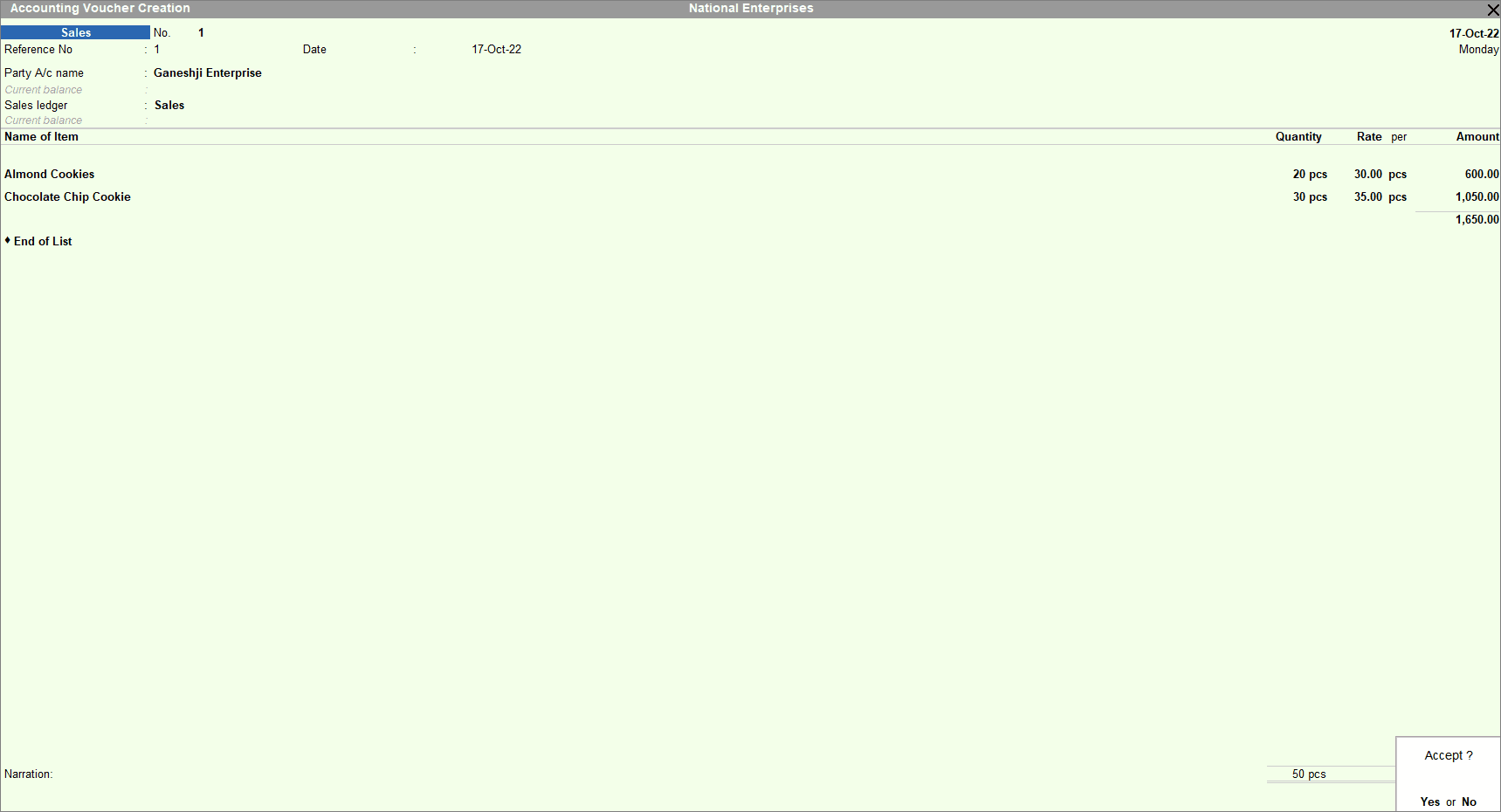
Sales voucher in Item Invoice mode shows the customer, Sales ledger, stock items, quantities and rates.
Official TallyPrime example; names, amounts and dates differ from the walkthrough. Source: TallyHelpThe remaining receivable is Rs 1,000 and the sale remains Rs 3,000.
Recording a customer payment as another sale would increase revenue incorrectly and may leave the original customer balance open. The bank can show the payment correctly while the accounts show the wrong reason for it.
For a cash sale, the sales entry can record the payment directly through the cash account. Do not create another receipt for money that has already been recorded in the sale.
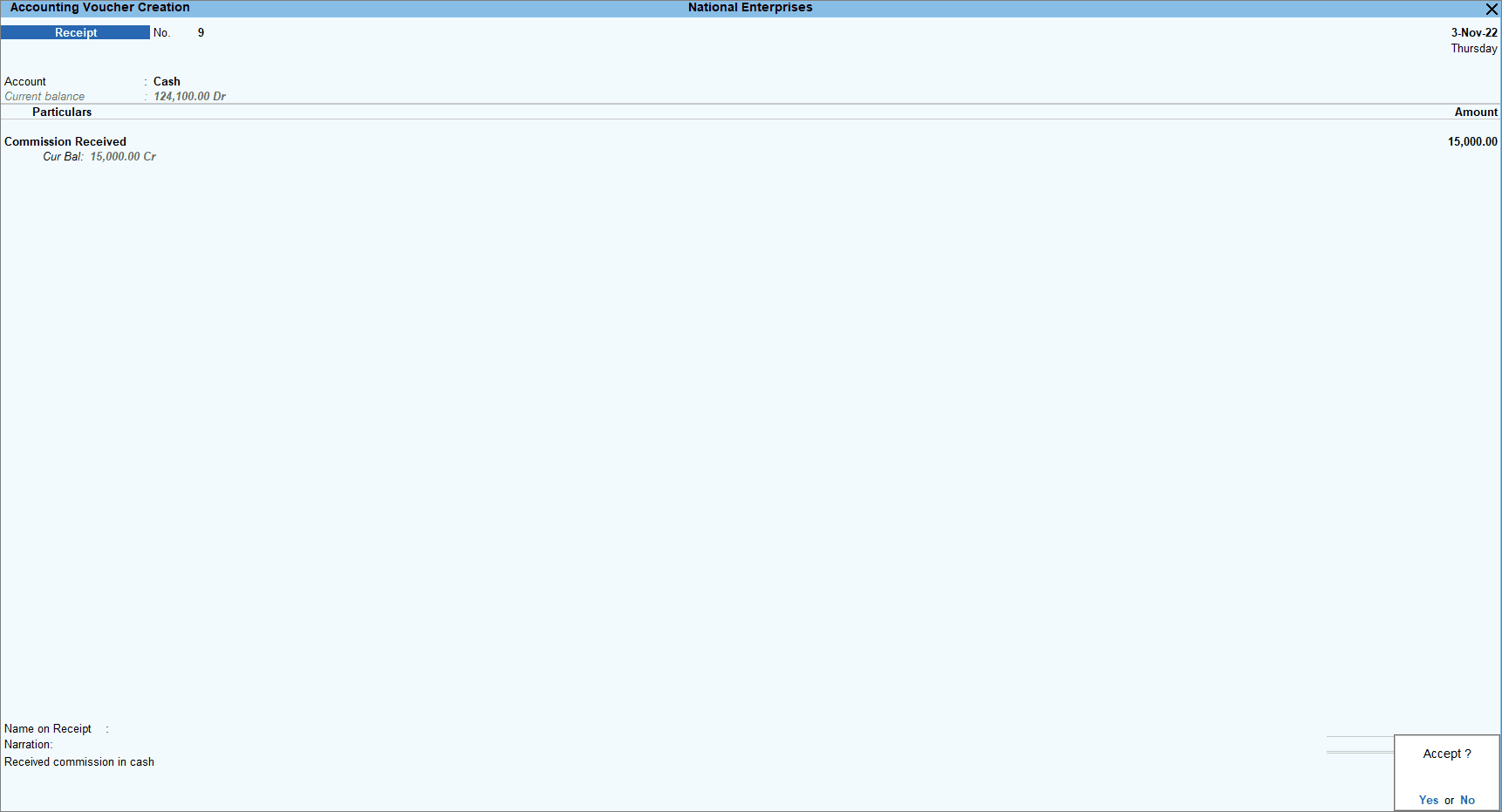
Receipt voucher records money received. It is separate from the sales voucher that records the sale.
Official TallyPrime example; names, amounts and dates differ from the walkthrough. Source: TallyHelpA purchase and its payment work the same way
Aster receives a Rs 4,000 supplier invoice for trading stock and records the purchase on credit. It later pays Rs 1,500 toward that invoice.
The Purchase voucher records the purchase and the amount owed to the supplier. The Payment voucher records the payment and reduces the amount owed. If Rs 5,000 was owed and Rs 2,500 was paid, the remaining supplier balance is Rs 2,500.
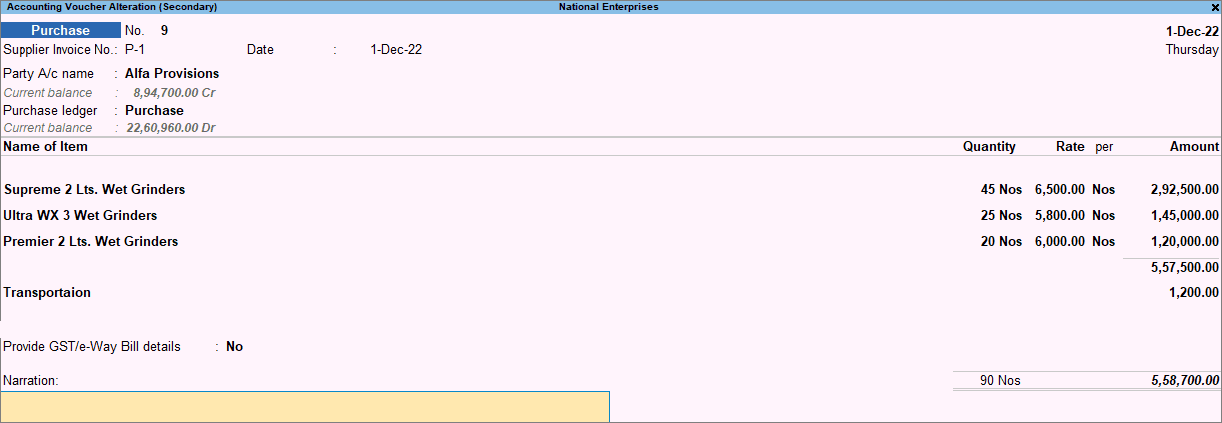
A recorded Purchase voucher shows the supplier invoice reference, party account, Purchase ledger and purchased items.
Official TallyPrime example; names, amounts and dates differ from the walkthrough. Source: TallyHelpBefore recording a payment, check whether the purchase or expense is already recorded. An expense paid immediately and a payment against an existing supplier bill are different transactions and should be recorded differently.
For example, stationery bought and paid for immediately can be recorded directly against the expense account. If the supplier bill is already recorded, the payment should settle the supplier balance instead of recording the expense again. TallyHelp payments and receipts.
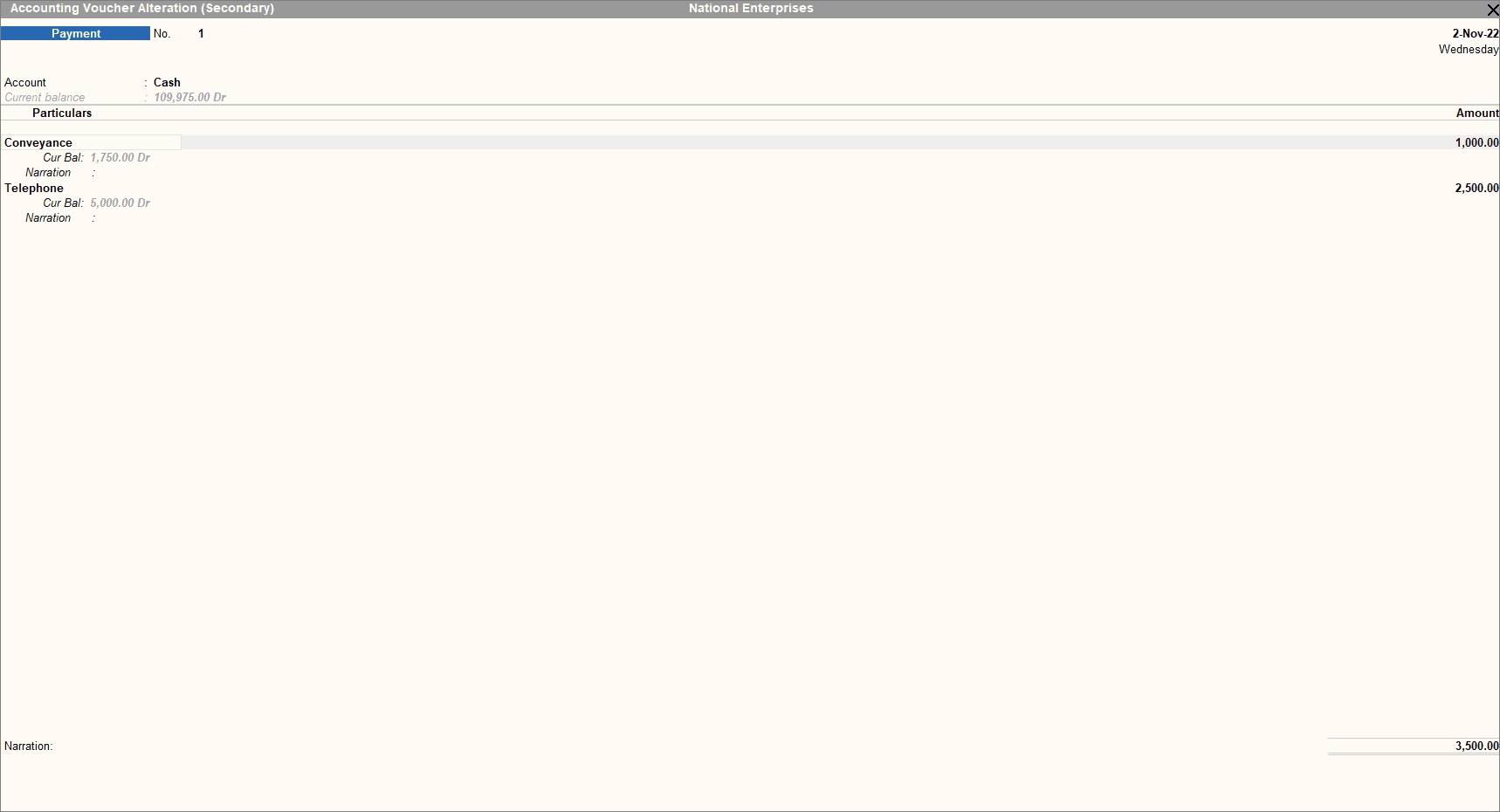
Payment voucher records money paid out, such as a supplier settlement or expense payment.
Official TallyPrime example; names, amounts and dates differ from the walkthrough. Source: TallyHelpUse Contra for internal cash and bank transfers
Suppose Aster deposits Rs 5,000 of its cash into its own bank account. Cash decreases by Rs 5,000 and bank increases by Rs 5,000. The business has moved an existing asset; it has not earned another Rs 5,000.
A Contra voucher is normally used for transfers between the business's own cash and bank accounts. It can also be used for transfers between the business's own bank accounts or for cash withdrawn from a bank account. TallyHelp on Contra entries.
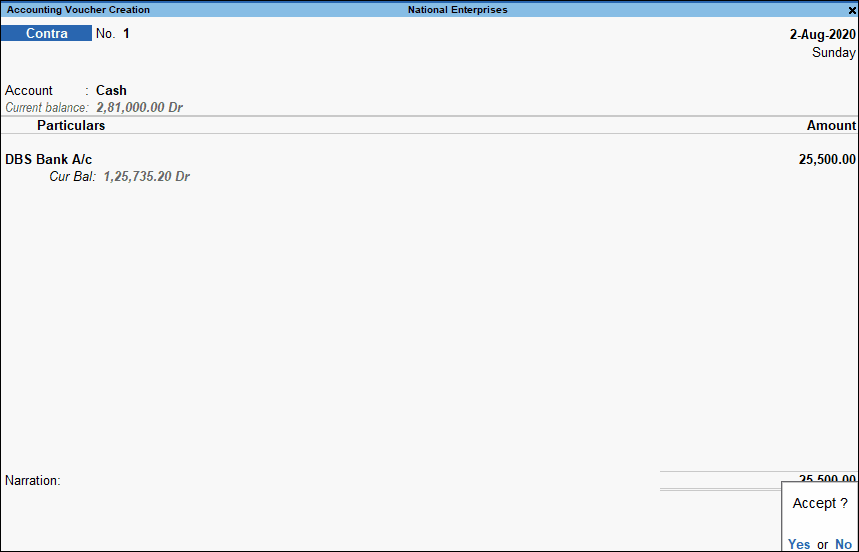
Contra voucher shows the cash and bank accounts involved in an internal transfer. This official example illustrates a bank withdrawal; a cash deposit moves the money in the opposite direction.
Official TallyPrime example; names, amounts and dates differ from the walkthrough. Source: TallyHelpA payment to a supplier is different because it involves another party. It should be recorded as a Payment, even if the payment is made through a banking app.
Use Journal when the adjustment calls for it
A Journal voucher is used for adjustments such as depreciation or moving an amount between accounts. You should understand the debit and credit effect before recording the entry.
For example, a depreciation entry reduces profit and updates the relevant asset or accumulated depreciation account according to the business's accounting policy. The amount and treatment should be confirmed before entering it.
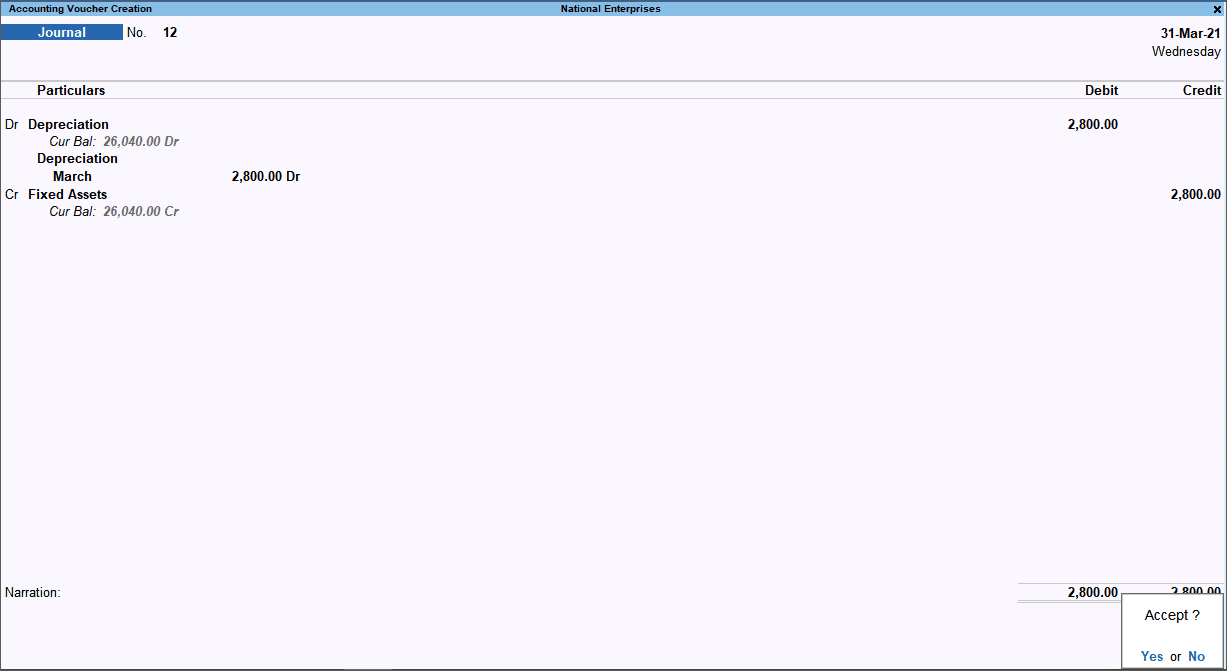
Journal voucher shows a depreciation debit and the corresponding fixed-asset credit.
Official TallyPrime example; names, amounts and dates differ from the walkthrough. Source: TallyHelpDo not use a Journal voucher just because you are unsure which voucher type to choose. Using the correct voucher type keeps the transaction clear and makes it easier to review later.
Returns need more than a reversed amount
If Maple returns two packs of paper, Aster needs to consider the original invoice, the reduction in the customer balance and the goods coming back into stock. A Credit Note supports the sales adjustment; the inventory recording must match the actual return workflow.
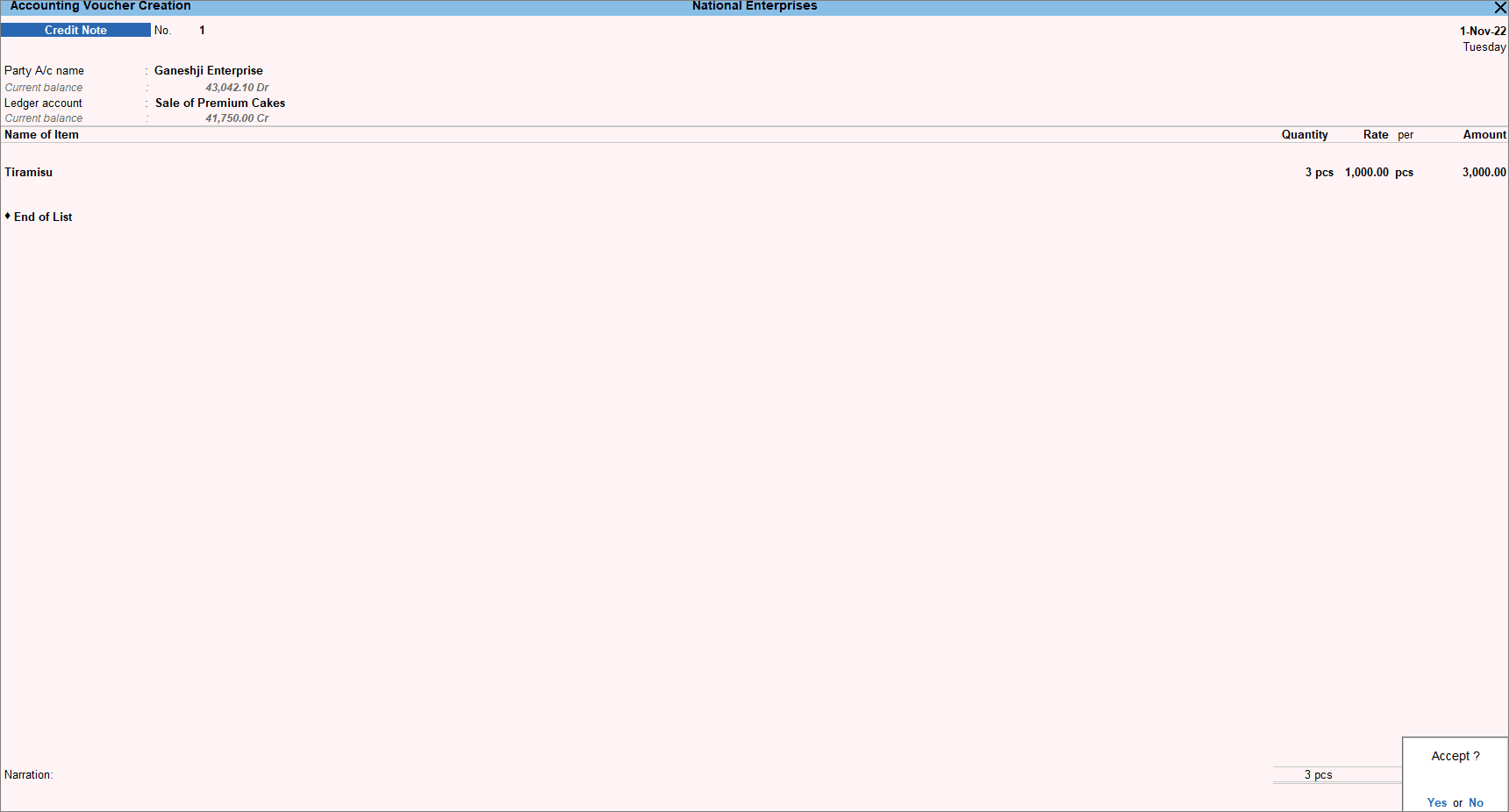
Credit Note in Item Invoice mode shows the customer, sales ledger and returned goods.
Official TallyPrime example; names, amounts and dates differ from the walkthrough. Source: TallyHelpFor a purchase return, consider the supplier's original invoice and the stock leaving the business. The corresponding purchase adjustment commonly uses a Debit Note.
Record references carefully. Two documents with the same amount are not necessarily related. A reference helps the reviewer identify which transaction the adjustment belongs to.
Orders and stock movements have their own records
A customer order is a request to supply goods. A delivery records the goods leaving the business, while an invoice records the sale. These steps may happen on the same day or on different dates.
TallyPrime includes Sales Orders, Purchase Orders, Delivery Notes, and Receipt Notes for these stages. Stock Journal and Physical Stock vouchers are used for other inventory activities. These vouchers serve different purposes from the vouchers used to record regular sales and payments. TallyHelp accounting and inventory.
Aster should not assume that creating an order means revenue has been recorded, or that entering an invoice proves the warehouse dispatched the goods. The records need to follow what actually happened.
Check your choice before saving
Describe the event in one sentence: “Maple paid Rs 2,000 against invoice MS-101.” Then check whether your voucher captures that sentence.
Confirm the company, date, accounts, amount and reference. After saving, inspect the relevant balance. In this case, Maple's receivable should fall by Rs 2,000 while the receiving cash or bank account increases by the same amount.
The TallyPrime shortcut guide makes these screens faster to reach. Knowing the expected result makes the entry worth saving.
Keep reading
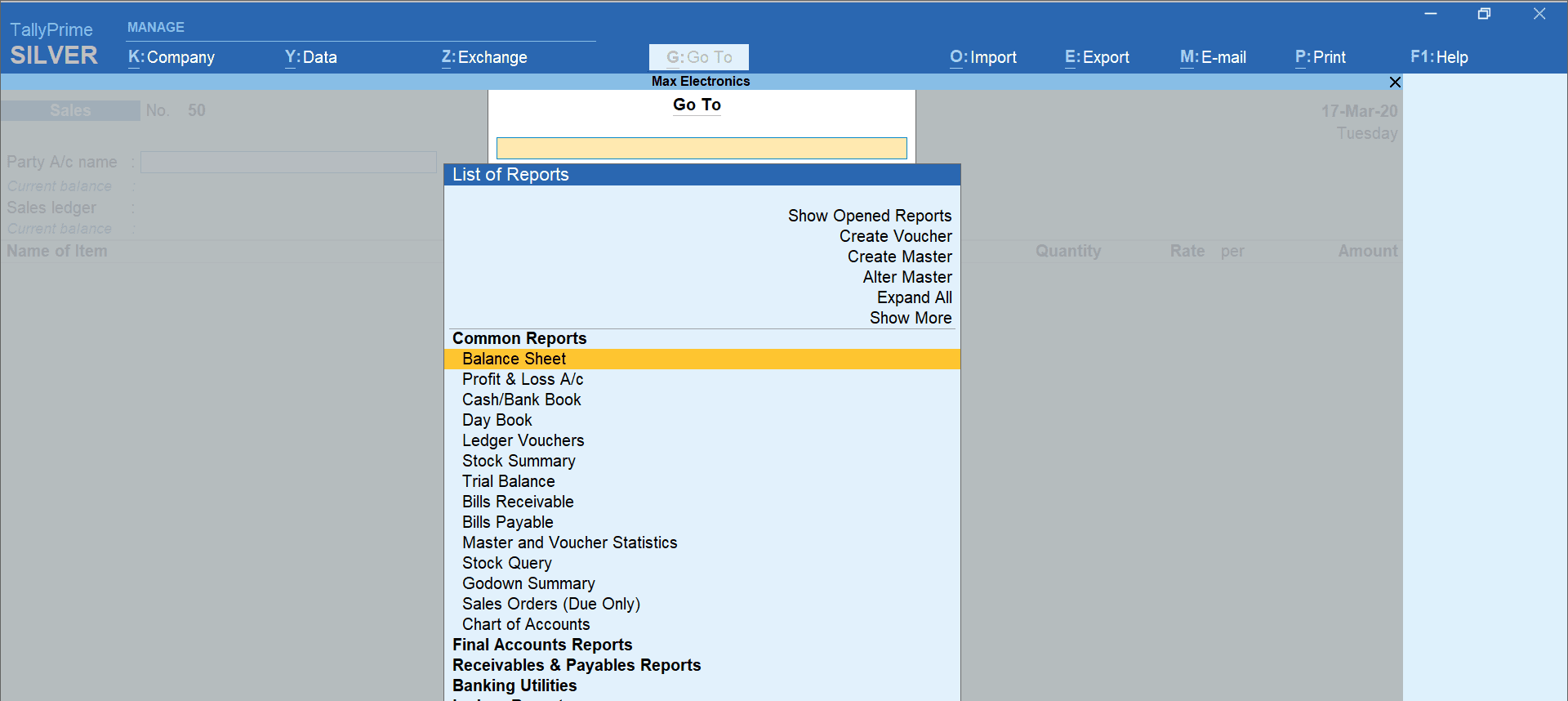 Tally basicsTallyPrime Shortcut Keys for Everyday Accounting WorkFind TallyPrime shortcut keys for vouchers, navigation and reports, plus a practice routine and checks for keyboard or remote-session problems.
 Tally basicsWhat Is Tally? Accounting, Inventory and Business Uses ExplainedUnderstand what Tally does with a simple business example covering sales, payments, stock and profit, plus where TallyPrime and AI fit.
 Tally basicsHow to Use TallyPrime: From Company Setup to Your First TransactionLearn TallyPrime with a practice company, opening balances and one payment entry. Check the Day Book, cash balance and Trial Balance afterward.